
Makeup for Tired Eyes with Dark Circles (Look Awake Naturally)


Makeup for Tired Eyes with Dark Circles: How to Look Awake Naturally
When Your Eyes Look More Tired Than You Feel
You can sleep well and still look tired.
It happens. More often than people admit.
And when it does, it shows in the same place first—your eyes. A bit of darkness, a slight heaviness… nothing dramatic, but enough to change how your whole face looks.
You catch it in the mirror and think, something’s off.
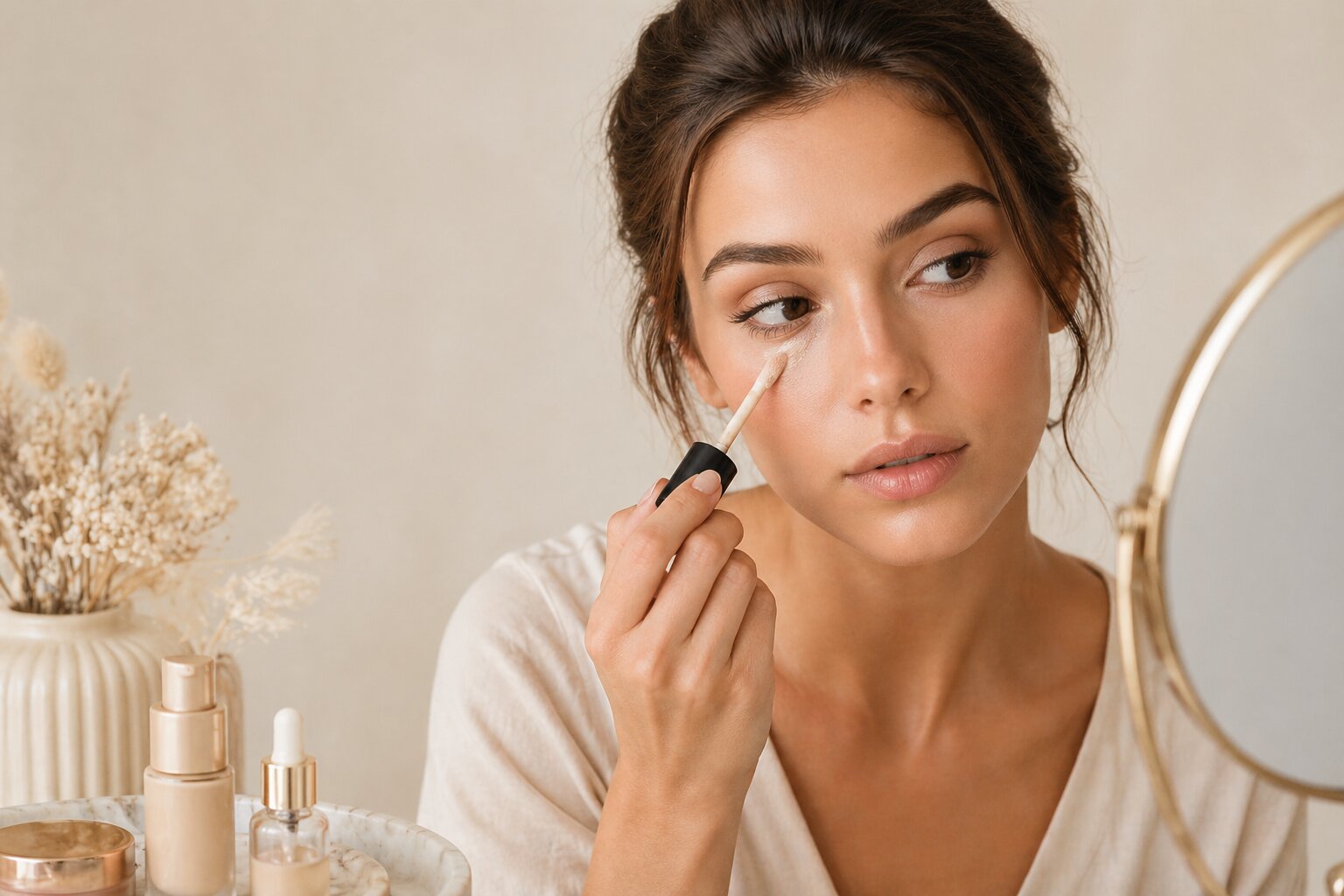
Why Adding More Makeup Usually Backfires
The instinct is predictable.
You try to cover it.
More concealer. Maybe a thicker one this time. Blend it more, set it better.
I’ve seen this a lot—and it almost always goes the same way.
The more product you add under the eyes, the more it settles into everything you were trying to fix. Lines, texture, shadows… they don’t disappear, they just get outlined.
It’s Not About Covering—It’s About Softening
At some point, you realise something.
You’re not trying to erase dark circles completely. You’re just trying to make them less noticeable.
That’s a very different approach.
A small amount of something light—slightly brightening, not heavy—tends to work better than full coverage. It keeps the skin looking like skin.
And that matters more than perfect coverage.
Where You Put Concealer Changes Everything
Most people apply concealer across the entire under-eye area.
It makes sense—but it flattens everything.
A better way is more selective.
Inner corner. Maybe a small lift toward the outer edge. Then stop.
It can feel like not enough at first. But once it blends in, it usually looks… right.
Colour Correction—Use It Carefully
If your dark circles lean blue or purple, a bit of warmth helps.
Peach tones, something subtle.
But this is where it’s easy to overdo it.
Too much, and suddenly you’re correcting the corrector. Adding more layers just to balance things out again.
A thin layer is usually enough.
Powder Is Where Things Often Go Wrong
This step ruins more under-eye makeup than people realise.
Too much powder and the area starts to look dry. Slightly textured. A bit older, even.
Too little, and it creases quickly.
So you keep it minimal. Just enough to hold things in place.
And honestly—sometimes skipping it works better.
Small Details That Actually Wake Up the Face
It’s rarely just about concealer.
A few small things make a bigger difference:
- lifting the lashes slightly
- keeping eye makeup soft
- adding a bit of brightness near the inner corner
None of these stand out on their own. But together, they change how awake your eyes look.
What Makes It Worse (Without You Noticing)
It’s usually not one big mistake.
It’s a combination:
- too much product
- too many layers
- trying to “fix” everything at once
- using formulas that are too heavy
You don’t notice it while you’re doing it. But it shows.
What Actually Works
After a while, you start to see a pattern.
The people who look the most awake aren’t covering everything.
They’re softening things. Letting some of the natural skin show through.
It’s not perfect—but it looks better.
Before You Add More
If something isn’t sitting right under your eyes, adding more product rarely fixes it.
Usually, it does the opposite.
Taking a step back—using less, placing it better—almost always looks more natural.
And a lot more awake.
When Nothing Seems to Work
There are days when even your usual routine doesn’t sit quite right.
Your concealer creases faster. Your skin feels different. The same products just don’t behave the same way.
That’s normal.
Most people assume they need better products, but in reality, it’s often about adjusting how much you use—and where.
On days when your under-eye area feels more tired than usual, using less product and focusing on placement tends to work better than trying to perfect everything.
Sometimes, doing less is what actually makes you look more put together.
If you’re looking for more simple, natural beauty ideas that actually work → TROPHINA